
There’s a scent that, once encountered, you never forget. Earthy, pungent, almost animal, yet capable of turning a simple dish into something extraordinary. And then there’s the flavour: enveloping, complex, with a persistence that lingers in the mouth long after the last bite.
You’re thinking of the Alba white truffle, the most celebrated product of the Langhe and one of the most sought-after in the world. But what makes it so special? When to find it, how to recognise it, how much it costs and, above all, where to taste it at its best?
In this guide you’ll find everything you need to truly experience the white truffle, not just hear about it.
What the Alba white truffle is and why it’s so rare
The white truffle (Tuber magnatum Pico) is a fungus that grows underground, technically described as hypogeal, in symbiosis with the roots of specific trees such as oak, poplar, willow and lime. It cannot be cultivated: it grows spontaneously, in precise places, with an unrepeatable combination of climate, soil and vegetation. And it’s precisely this impossibility of taming it that makes it so precious.
The hills of the Langhe and Monferrato offer the ideal conditions: clay-limestone soils, mixed woodlands, significant temperature swings between night and day. It’s no coincidence that the area around Alba is recognised worldwide as the heart of top-quality white truffle production, so much so that the International Alba White Truffle Fair, every autumn, draws collectors, chefs and enthusiasts from every continent.
Unlike the black truffle, the white one can’t tolerate heat. It must be eaten raw, shaved on the spot, straight onto the plate. This fragility adds a further level of exclusivity. Anyone eating real white truffle has to be in the right place, at the right time.
The white truffle season: when to look for it
The white truffle season officially begins in October and ends in December, with the peak of excellence between late October and mid-November. In this period, the fungus reaches optimal ripeness. The aroma is at its height, the texture ideal, the flavour unmistakable.
Some particularly favourable vintages, marked by a hot summer and a rainy autumn, allow fine specimens to be found as early as the second half of September. Conversely, dry seasons or ones with unusual temperatures can significantly reduce both the quantity and the quality of the harvest.
If you’re planning a trip to the Langhe with the aim of living the white truffle experience in its most authentic form, the golden period is October and November. In these weeks, the area’s starred restaurants build entire menus around the fungus, the markets smell of earth and woodland, and the atmosphere has something magical about it. Light mists over the vineyards, golden foliage, lit fires.
How much the Alba white truffle costs
The price of the Alba white truffle varies every year depending on seasonal availability and fluctuates considerably. In an average season, the cost per kilo ranges between 2,500 and 4,000 euros. In poor years or for particularly large and prized specimens, the price can exceed 5,000 euros per kilo.
These figures explain why in restaurants the white truffle is often offered as a supplement by weight, with prices given per gram or per hundred grams. It may seem absurd, but it simply reflects a product whose availability changes from week to week and whose value depends strictly on the individual specimen.
One important aspect to consider: the white truffle perishes quickly. After being gathered, it keeps its organoleptic properties for just 7-10 days, under controlled temperature and humidity. Buying it and taking it home is possible, but it requires care. The best choice, and the most rewarding, remains eating it on site, trusting those who truly know it.
How to recognise a quality white truffle
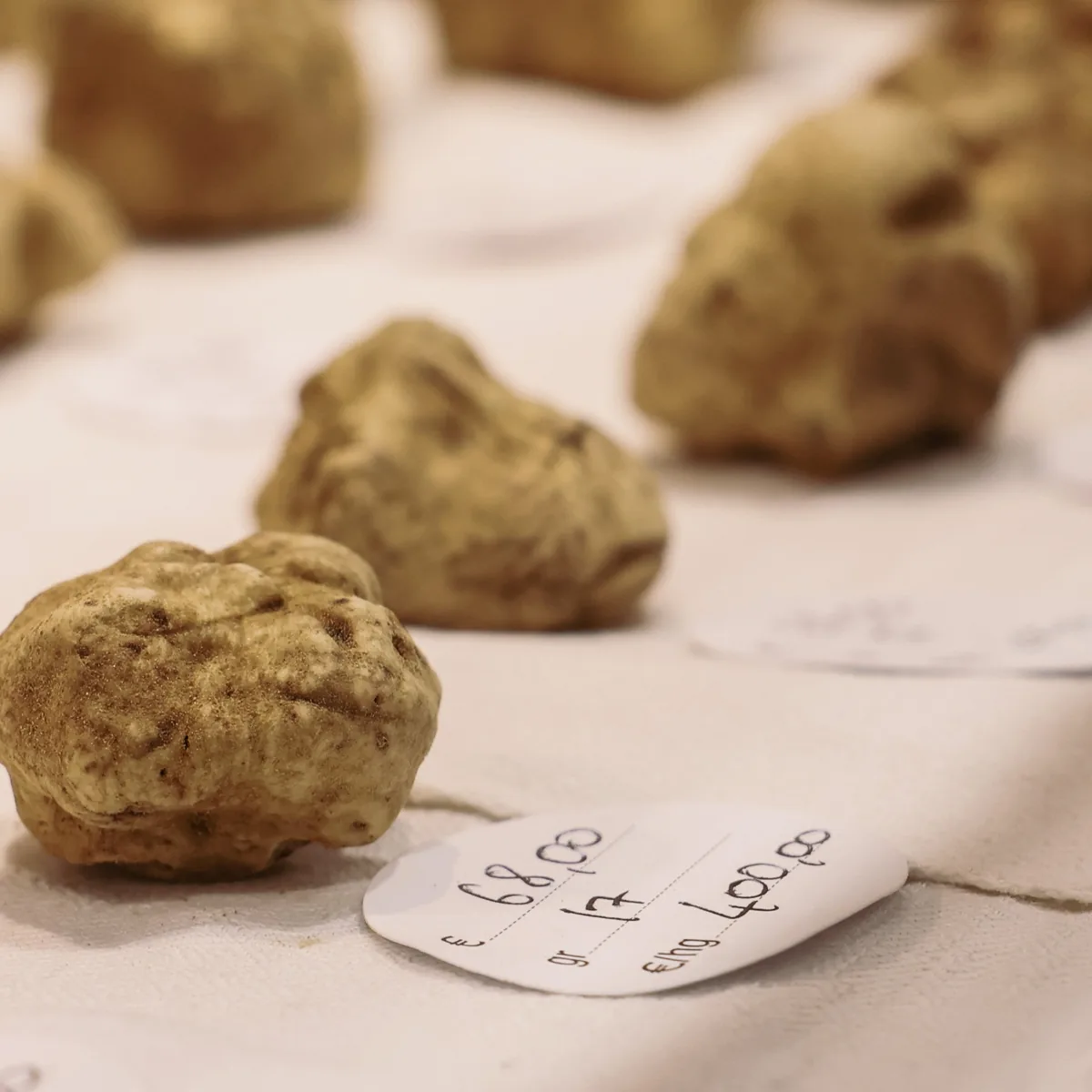
Knowing how to assess a good white truffle is a skill that develops over time, but there are a few key indicators accessible even without being an expert:
- The smell is the first judge. Bold, persistent, with notes of garlic, honey and damp earth. A quality white truffle announces itself; you don’t need to get too close to catch it. If it’s weak or absent, that’s a negative sign.
- The shape isn’t decisive. The white truffle can be irregular and knobbly, but the outer surface, which gatherers call the peridium, must be smooth, yellow-ochre or beige in colour, with no dark patches or soft spots.
- The texture must be firm and compact. A specimen that gives under slight pressure is probably overripe or poorly kept.
- The interior, called the gleba, should show white veins on a beige-hazelnut background: the finer and more regular the veins, the better the specimen generally is.
Be wary of white truffles sold out of season, at prices that are too low, or with no indication of origin. The Tuber magnatum Pico of the Langhe has very specific characteristics that set it apart from similar varieties produced elsewhere.
Where to eat white truffle in the Langhe
The Langhe, a UNESCO World Heritage Site since 2014, offer numerous opportunities to taste white truffle, but the quality of the experience depends a great deal on the setting. Local markets, farmhouses and trattorias each offer their own version, often authentic and enjoyable. Those seeking the most refined interpretation of the product, however, the one that brings out its nuances without covering them, turn to fine dining.
White truffle in the starred cuisine of Federico Gallo
At the Locanda del Pilone, a Michelin-starred restaurant set among the vineyards of Alba, the Alba white truffle is far more than a seasonal ingredient. Chef Federico Gallo, trained between Tuscany, Mexico and Northern Europe before returning to Piedmont, treats it with the same care reserved for the finest ingredients. He selects it personally, pairs it with millimetric precision and brings it to the table only when it expresses its best.
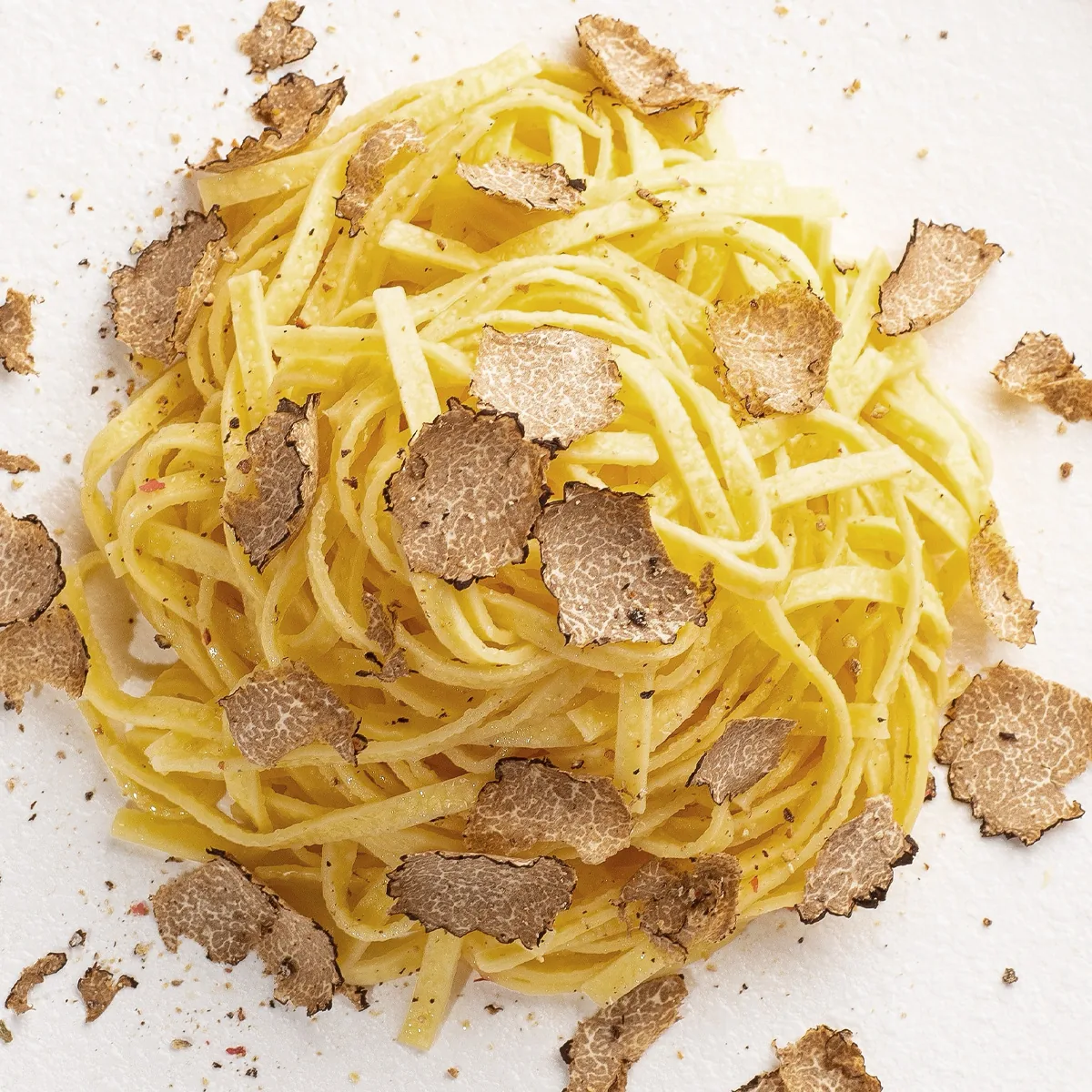
During the season months, the restaurant’s tasting menu is enriched with dishes built around the fungus. Eggs, fresh pasta, risottos, white meats that become support rather than protagonists, leaving the truffle its space. Gallo’s approach is one of subtraction: no aromatic overload, no element that competes with that inimitable scent. The truffle speaks for itself; the cuisine creates silence around it.
Paired with a selection from the wine list of over 1,400 labels, with special attention to the great Barolos of the territory, the experience becomes complete. An orchestra in which every element knows when to stay in the background.
Book your table during the truffle season
The truffle hunt: an experience to live
Eating the truffle is one thing; understanding where it comes from is another, and often the more memorable.
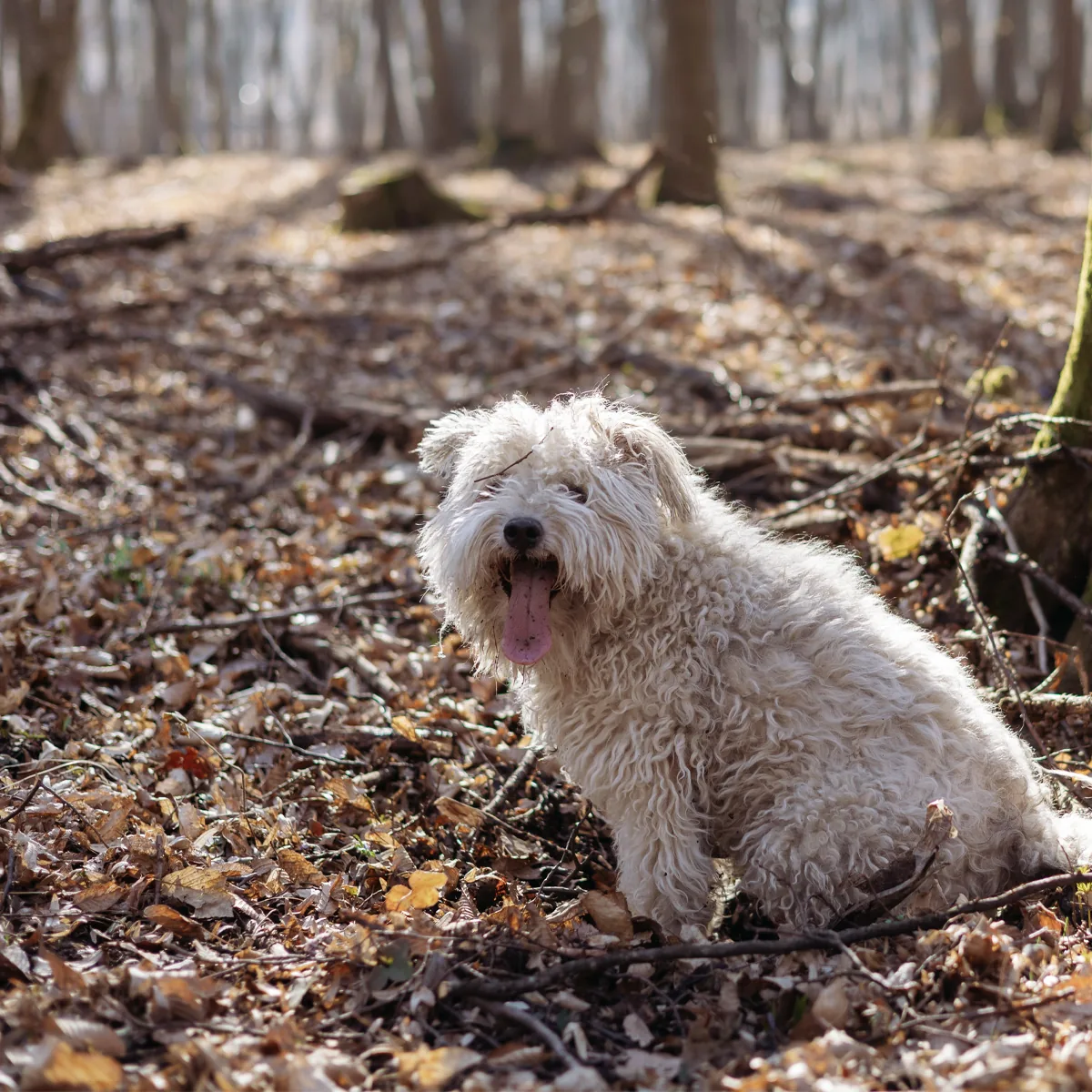
The simulated truffle hunt through the woods of the Langhe is an activity that lets you enter the world of the trifolau, the Piedmontese truffle hunters, guided by their trained dogs. No experience or special equipment is needed, just curiosity and the desire to walk through the woods on an autumn morning, with the smell of wet earth all around.
The Locanda del Pilone organises this experience as part of its programme of activities in the Langhe. A way to get close to the truffle before meeting it at the table, and to take home not just a flavour but a story.
Experience the simulated truffle hunt in the Langhe
White truffle and wine: perfect pairings
The Alba white truffle and wine are companions of the landscape before they are companions at the table. The same hills that nourish the fungus produce some of the longest-lived and most complex red wines in the world.
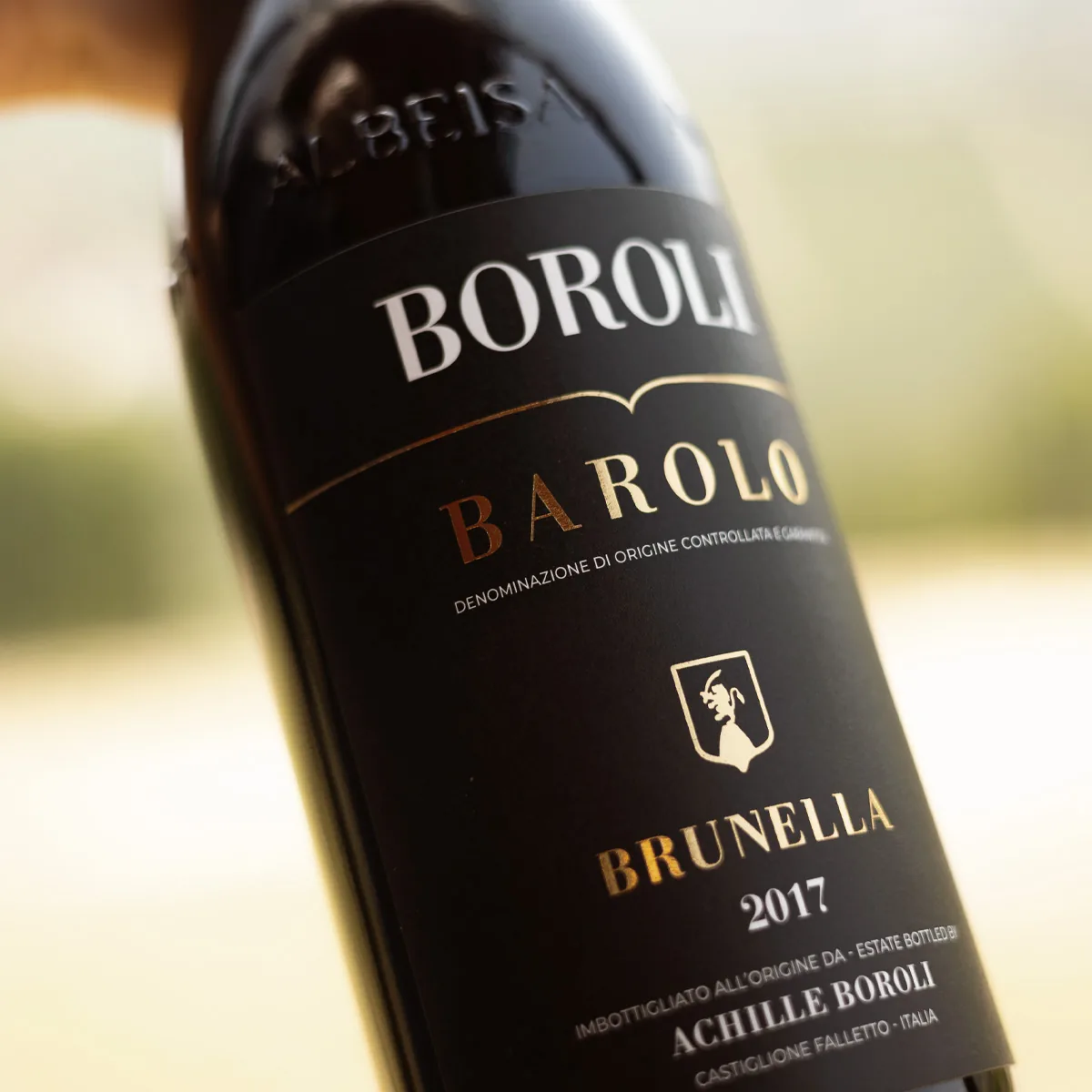
The classic pairing is with Barolo: structured, tannic, with tertiary notes of tobacco, leather and undergrowth that harmonise with the truffle’s aroma. A Barolo from a good vintage, perhaps from one of the Langhe’s historic crus, can hold its own against the fungus without overpowering it, building a balance that’s hard to describe and impossible to forget.
Those who prefer something fresher can turn to a young Barbaresco or an oak-aged Langhe Chardonnay. The softness of the white wine creates a pleasant contrast with the truffle’s power, especially in dishes based on eggs or pasta.
At the Locanda del Pilone, the sommelier is on hand to guide this choice, including the option to request a particular bottle at the time of booking. A service that reflects the house philosophy: anticipating wishes, not just meeting them.
Conclusions
The Alba white truffle is one of those products that can’t really be explained, only lived. Its rarity, strict seasonality, inimitable scent and ability to turn every dish into something extraordinary make it a symbol of the Langhe as much as the UNESCO vineyards and the medieval towers.
Knowing when to look for it, how to recognise it and where to taste it at its best is the starting point for a gastronomic experience that stays with you. And if you want that experience to reach its peak, there’s a place in the hills of Alba where the white truffle is treated with the reverence it deserves. One dish at a time, with an exceptional bottle and a view that takes your breath away.
Alba white truffle FAQ
When is the Alba white truffle season?
The white truffle season runs from October to December, with the peak of quality between late October and mid-November. The best time to taste it in restaurants is between the first and third week of November.
How much does the Alba white truffle cost?
The price varies each year depending on the season. On average, the cost per kilo ranges between 2,500 and 4,000 euros. In restaurants it’s often offered as a supplement by weight, calculated per gram.
How do you recognise a quality white truffle?
A quality white truffle has a bold, persistent smell, a smooth outer surface of a beige-ochre colour, a firm texture and regular internal veining. The smell is the first and most reliable indicator.
Where can you eat white truffle in the Langhe?
The Langhe offer many options. For a starred experience, the Locanda del Pilone in Alba offers seasonal tasting menus with Alba white truffle selected by chef Federico Gallo.
Can you go truffle hunting in the Langhe?
Yes. Some venues in the area, including the Locanda del Pilone, organise simulated truffle-hunting experiences in the woods with trifolau and trained dogs, available during the autumn season.